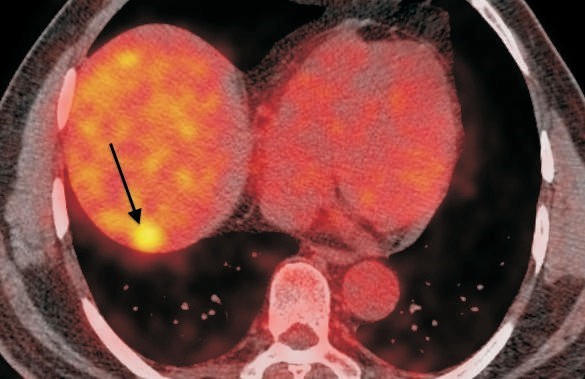
FDG PET vs PSMA PET vs DOTA PET vs FAPI PET – Which One Is Actually for You?
You have been advised to undergo a PET scan, but the type is unclear. Should you go for FDG, PSMA, DOTA, or the newer FAPI PET? The choice is not just technical. It directly impacts how accurately your condition is diagnosed and how quickly treatment can begin.
Many patients select a scan based on availability or PET scan whole body cost, only to realise later that a more targeted option would have provided clearer answers.
Here is where most confusion lies:
- Choosing the right cancer diagnosis test for a specific condition
- Deciding whether a general or specialised whole-body PET scan is required
- Understanding how each cancer cell tracer works differently
- Knowing why one scan detects a tumour while another may miss it
This guide simplifies each PET scan type so you can make a more informed decision.
What Actually Differentiates PET Scans?
All PET scans use a tracer to highlight abnormal activity in the body. The difference lies in what that tracer targets. Some focus on glucose metabolism, while others target specific proteins or tumour environments. This distinction determines how accurate the scan will be for a particular cancer type.
FDG PET Scan: The Standard First Step
The FDG PET scan is widely used and available at most cancer imaging centre facilities. It uses a glucose-based FDG tracer, which accumulates in fast-growing cancer cells.
FDG PET is often the starting point when the diagnosis is unclear or when a broad assessment is needed.
Where FDG PET works well
It is effective for detecting aggressive cancers, staging disease, and monitoring treatment response.
Key advantages
- Covers the entire body in one scan
- Suitable for multiple cancer types
- More accessible and cost-effective
Limitations
FDG PET is not highly specific. It may detect inflammation or infections, leading to false positives. It is also less reliable for slow-growing tumours.
PSMA PET Scan: Focused on Prostate Cancer
The PSMA PET scan for prostate cancer is designed specifically for prostate-related conditions. It targets a protein found on prostate cancer cells, making it a highly accurate prostate cancer detector.
This level of specificity allows for earlier and more precise detection compared to general scans.
When it is recommended
PSMA PET is advised for suspected prostate cancer, rising PSA levels after treatment, or detailed staging before therapy.
Why is it effective
- Detects very small lesions
- Improves localisation of cancer spread
- Reduces diagnostic uncertainty
Limitations
It is not useful for other cancer types and may cost more than FDG PET. However, for prostate cancer, it offers significantly better accuracy.
DOTA PET Scan: For Neuroendocrine Tumours
Neuroendocrine tumours often do not appear clearly on FDG PET scans. DOTA PET scan addresses this gap by acting as a specialised neuroendocrine tumours finder, targeting somatostatin receptors.
Where is it most useful
It is ideal for detecting slow-growing tumours and evaluating their spread.
Key strengths
- High sensitivity for neuroendocrine tumours
- Helps guide targeted treatments
- More accurate than FDG PET in these cases
Limitations
DOTA PET is not suitable for most other cancers and may not be widely available. When indicated, however, it significantly improves diagnostic clarity.
FAPI PET Scan: A Newer Approach
FAPI PET focuses on the tumour environment rather than the cancer cells themselves. It targets the FAPI fibroblast, which supports tumour growth.
This approach makes it useful in cases where traditional scans are inconclusive.
Why is it gaining relevance
It produces clearer images with less background interference and can detect cancers that FDG PET may miss.
Where it fits best
- Complex or unclear diagnoses
- Tumours with low metabolic activity
- Cases where previous scans have failed
Limitations
FAPI PET is still emerging and not widely accessible, though its clinical potential is strong.
Comparative Overview of PET Scan Types and Their Clinical Use Cases
| Scan Type | Best Use Case | What It Targets | Accuracy | Availability |
| FDG PET | General cancers | Glucose metabolism | Moderate to high | Widely available |
| PSMA PET | Prostate cancer | PSMA protein | Very high | Increasing |
| DOTA PET | Neuroendocrine tumours | Somatostatin receptors | Very high | Limited |
| FAPI PET | Multiple or unclear cancers | Tumour fibroblasts | High | Emerging |
How to Choose the Right PET Scan
The right scan depends on the suspected cancer type and clinical context, not just convenience or cost.
A general whole-body PET scan using FDG is often sufficient for initial evaluation. However, more targeted scans provide better accuracy when the cancer type is known.
Practical guidance
- Use FDG PET for broad or initial assessment
- Choose PSMA PET for prostate-related concerns
- Opt for DOTA PET in neuroendocrine tumours
- Consider FAPI PET when results are unclear
A clinically guided decision always delivers better outcomes than a general approach.
Cost vs Diagnostic Value
While PET scan whole body cost is an important factor, it should not be the only consideration. An unsuitable scan can lead to repeat tests, delayed diagnosis, and higher overall costs.
Choosing the right scan at the right time often saves both time and resources while improving diagnostic accuracy.
Final Perspective
FDG PET offers a broad overview, PSMA PET provides precision for prostate cancer, DOTA PET is essential for neuroendocrine tumours, and FAPI PET is emerging as a valuable option for complex cases.
Understanding these differences helps ensure that your diagnosis is both timely and accurate.
Take the Next Step
If you are unsure which scan is appropriate, seek expert guidance rather than relying on general assumptions. For accurate recommendations and advanced imaging support, connect with Picture This by Jankharia and move forward with confidence.
Frequently Asked Questions
The right cancer diagnosis test depends on the type and behaviour of the tumour. Different scans are designed for different biological targets.
- FDG PET is suitable for general cancers
- PSMA PET works best for prostate cancer
- DOTA PET detects neuroendocrine tumours
- FAPI PET helps in complex cases
The FDG tracer focuses on glucose metabolism, unlike other scans that target specific proteins or tumour environments.
- Detects high metabolic activity
- May show inflammation
- Suitable for full-body imaging
- Less specific for certain tumours
Yes, the PSMA PET scan for prostate cancer is highly accurate and functions as a specialised prostate cancer detector.
- Identifies small lesions
- Improves staging accuracy
- Detects recurrence early
- Provides targeted imaging
DOTA PET is preferred when a neuroendocrine tumours finder is required, especially for slow-growing tumours.
- Detects receptor-based tumours
- More precise than FDG PET in such cases
- Helps in therapy planning
- Reduces missed diagnoses
FAPI PET targets the FAPI fibroblast in the tumour environment rather than the cancer cells directly.
- Works across multiple cancers
- Produces clearer images
- Useful in inconclusive cases
- Still developing in availability